
A Building Owner’s Guide to New York City Snow Removal and Slip-and-Fall Risks
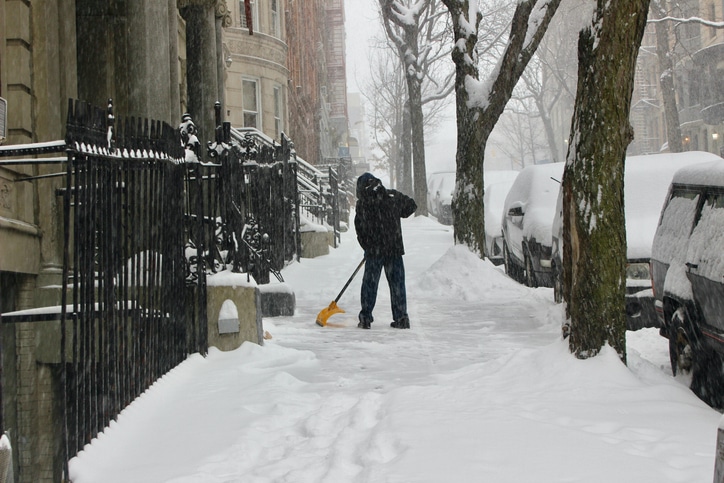
New York City requires building owners to clear snow and ice according to strict deadlines. Meeting the Department of Sanitation’s requirements, however, is only part of the job. A sidewalk, stoop or entrance can become slippery again after it has been shoveled, and an injury may lead to a slip-and-fall claim. Some insurance companies also ask building owners to provide a written snow and ice removal plan.
This guide explains the city’s snow-removal rules and the practical steps owners can take to prepare for storms, monitor winter hazards and document the work performed.
Snow Removal Responsibilities in NYC
New York City requires property owners, tenants, occupants and others in charge of a building to clear snow and ice from the adjacent sidewalk. Before the first storm of the season, building owners need to decide who will perform the work. If a superintendent, commercial tenant or snow-removal contractor is expected to handle it, owners should confirm which areas that person will clear and who will step in if that person is unavailable.
The city’s snow-removal requirements focus on the public sidewalk. Owners should also account for entrances, stoops, exterior steps and other areas used by tenants, visitors and delivery workers. Regardless of who performs the work, the owner needs a reliable way to confirm completion and determine whether the property must be checked again.
NYC Snow Removal Deadlines
The timetable for cleaning snow depends upon when the snow stops falling.
If the snow stops between:
- 7:00 a.m. and 4:59 p.m. — Clear within 4 hours.
- 5:00 p.m. and 8:59 p.m. — Clear within 14 hours.
- 9:00 p.m. and 6:59 a.m. — Clear by 11:00 a.m.
Failure to remove the snow by the deadline can result in building fines: $100 for the first offense, $150 for the second and $250 for the third and subsequent offenses, according to DSNY’s current snow-removal rules.
Why Building Owners Need a Snow and Ice Plan
Depending on the company, an insurer may ask for a written snow and ice removal plan after a property inspection or as winter approaches. Often, it wants a simple bullet-point procedure identifying who will do the work, which areas will be cleared and who will serve as backup. Even when a plan is not required, writing down the procedure can help the owner respond consistently and document what was done if a claim arises.
Before winter, check the snow shovel, stock ice melt and sand, and arrange for a snow-removal service if the owner or superintendent may be away. The plan should also state when the property will be checked again for melting and refreezing. Snow removal is rarely a one-time job; a sidewalk that was clear in the afternoon may become slippery again that evening.
In addition, owners should keep a simple record of when the property was inspected, shoveled and treated. Photos, contractor invoices and a brief snow-removal log can help show what steps were taken if a slip-and-fall claim arises. Documentation won’t prevent a claim, but it shows the owner’s diligence and avoids having to reconstruct the day’s events weeks or months later.
Snow and Ice Removal for NYC Brownstones and Townhouses
Owners of NYC brownstones and townhouses may need to clear several outdoor surfaces at different levels, including the public sidewalk, stoop, exterior stairs, landings and garden-level entrances. Each access point should be included separately in the property’s snow and ice removal plan.
If tenants use different entrances, follow each route from the sidewalk to the door and identify every surface that requires attention. Clearing the main stoop does not address a separate garden-level entrance, and clearing the public sidewalk does not make the exterior steps safe.
Owners should also decide where to put the excess snow. Avoid piling snow where it blocks an entrance, the top or bottom of a staircase, a cellar hatch or a drain. As the snow pile melts, check nearby steps, landings and recessed areas for runoff and refreezing. One route to the building may be safe while another remains slippery.
How Sidewalk Inspections Help Reduce Winter Slip-and-Fall Risks
Inspect sidewalks, steps and entrances before winter and continue checking them throughout the season. Snow can conceal cracked, uneven or raised sidewalk flags, while freezing and thawing may worsen an existing defect. Before and after a storm, watch for buckled pavement, accumulated meltwater and other surfaces that could become slippery.
If a city tree appears to be lifting the sidewalk, report the condition through 311 and keep the service-request number. It documents that the condition was reported and may help show what steps the owner took if a claim arises. However, filing a report does not necessarily eliminate the owner’s responsibility for maintaining the sidewalk.
Tips for Removing Snow and Ice
- DO remove snow from sidewalks in front of, beside and, if applicable, behind the building.
- DO clear snow, ice and debris away from fire hydrants in front of or beside your property.
- DO create a path at least four feet wide, where possible.
- DO clear a path to the crosswalk if you own a corner property. Also, if the snow has melted and created puddles, move the water away from the crosswalk to help those in wheelchairs, people pushing strollers, etc.
- DO remove snow and ice surrounding unsheltered bus stops on or beside your property.
- DO NOT shovel snow into the street or crosswalks.
- DO use a de-icing product to help melt packed snow and ice that cannot be cleaned with a shovel.
- DO clear away any puddles that result from snow melt. Otherwise, it can refreeze and create a safety hazard.
For current New York City snow and ice removal requirements, visit NYC 311. If you have questions about insurance for a residential or mixed-use building or want to review your liability limits for potential slip-and-fall claims, call our office at 877-576-5200.


Stuart (Stu) Cohen is Founder and Principal of the City Building Owners Insurance program. For more than more than 50 years, he has specialized in insuring multifamily buildings, brownstones, and other residential properties throughout the greater New York City area. Named a Power Broker by Risk & Insurance magazine, Stu regularly advises property owners on risk management, insurance coverage, and strategies for protecting their real estate investments.