Electrical Safety Risks NYC Landlords Can’t Ignore
May is National Electrical Safety Month, making it a good time for New York City property owners to take a closer look at one of the most common—and often overlooked—sources of building risk: electrical systems.
Electrical issues are more than a maintenance concern. They’re a leading cause of residential fires, property damage, and insurance complications, particularly in older buildings, which are common throughout the five boroughs.
Why Electrical Risk is Higher in NYC’s Older Residential Buildings
Electrical malfunctions remain a leading cause of residential fires nationwide, but the risk is more pronounced in dense, aging housing markets like New York City.
Several factors contribute to this increased exposure:
- Aging infrastructure in pre-war buildings. Many properties still rely on systems that were not designed for today’s electrical demand.
- Higher, continuous usage across multiple units. Modern living places sustained strain on circuits, particularly in smaller multi-unit properties.
- Modifications that may not meet current code. Over time, repairs and upgrades—especially undocumented or unpermitted work—can introduce hidden vulnerabilities.
Even minor issues can escalate quickly, particularly when they develop behind walls or within individual units.
As of mid-April 2026, the New York City Fire Department reported 29 fire deaths, attributing nine of the fatalities to electrical fires. For property owners, the risk of electrical fire translates to potential loss of life, tenant displacement, property damage and insurance exposure.
How Aging Building Systems Create Electrical Risk in NYC Properties
Many residential properties in New York City were built when electrical usage was far more limited. A typical unit might have supported basic lighting, a few appliances and minimal plug-in devices.
Today, that same space will likely need to support:
- Multiple personal devices per occupant
- Home office equipment and always-on electronics
- Simultaneous operation of high-draw appliances
In smaller properties, this situation creates a disconnect between how the building was designed to function and how it is used today—especially when older electrical systems remain in place.
Understanding this mismatch can help landlords identify where the greatest electrical risks may exist.
Common Electrical Risks in NYC Residential Buildings
For landlords and property owners, the most common sources of electrical risk aren’t dramatic failures. The danger typically comes from gradual issues that lead to workarounds, such as increased reliance on extension cords.
Outdated or deteriorating wiring
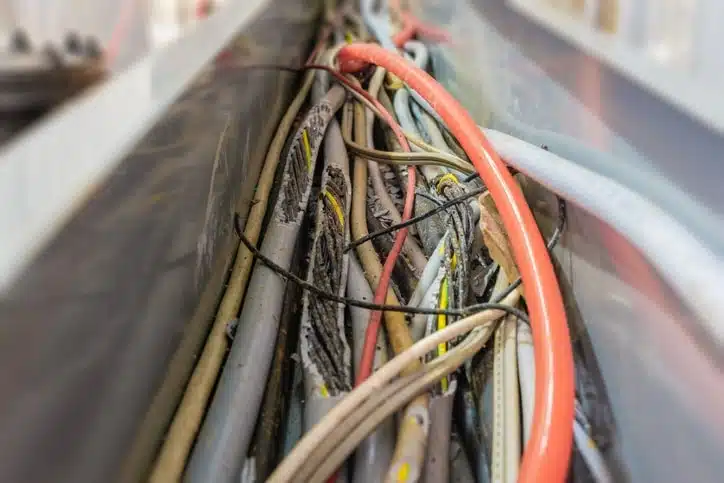
Older wiring systems in many NYC buildings reflect the era in which they were constructed. In some cases, multiple generations of wiring may still be used within the same property.
Common examples include:
- Knob-and-tube wiring (pre-1940s). Still found in some older buildings, this system lacks grounding and relies on insulation that can deteriorate over time. Designed for significantly lower electrical demand, it is no longer permitted for new installation under the current New York City electrical code.
- Aluminum wiring (late 1960s to early 1970s). During this period, aluminum wiring was commonly used as a lower-cost alternative to copper and may still be present in smaller properties. Aluminum is more prone to expansion and contraction than copper. Over time, connections at outlets and fixtures can loosen, increasing resistance and heat buildup.
- Aging wiring insulation. Over time, insulation materials can dry out or crack, particularly in areas exposed to heat or moisture, increasing the risk of exposed conductors, short circuits or electrical arcing.
Even where portions of a system have been upgraded, older wiring may remain behind walls or in less-visible areas, raising the likelihood of overheating or connection failure under normal use.
Overloaded circuits and outlets
Many older NYC properties were built when electrical demand was far lower. A single outlet might have supported a lamp or a radio—not today’s constant mix of appliances and personal devices.
In practice, tenants now rely on:
- Power strips and extension cords to expand limited outlet access
- Multiple high-draw appliances in kitchens and living areas
- A growing number of everyday electronics, from laptops and televisions to electric toothbrushes and charging stations
This increased demand can place sustained strain on circuits that were never designed to handle it. Overloaded circuits are more likely to overheat, trip breakers or fail at connection points.
Because much of this usage occurs within individual units, it can be difficult for property owners to monitor or control, making it especially important to ensure that the underlying electrical system can safely handle modern demand.
Improper or unpermitted modifications
The New York City Department of Buildings requires a permit and the use of a Licensed Master Electrician for any installation or modification of electrical systems. This requirement applies to minor replacement and repairs, including:
- Replacement of defective circuit breakers or switches
- Repair of defective fixtures
- Replacement of fixtures in existing outlets
Electrical work totaling 1,000 kilovolt-amperes (kVA) or more also requires a Registered Design Professional, who must submit construction documents for DOB approval.
Wear and tear in high-use areas
Outlets, switches, and panels in kitchens and bathrooms tend to degrade more quickly due to frequent use.
In residential units, these areas see especially high daily demand:
- Repeated use of small appliances and personal care devices
- Frequent plugging and unplugging of cords
- Simultaneous use of multiple devices on the same circuit
Over time, this level of activity can loosen connections, wear down components, and increase the risk of heat buildup or electrical failure. Such wear develops gradually and may not be readily visible, which makes regular inspections and timely replacement of aging components especially important.
Warning Signs Landlords Shouldn’t Ignore
Electrical issues rarely appear out of nowhere. Early warning signs often include the following:
- Flickering or dimming lights
- Frequently tripped circuit breakers
- Warm or discolored outlets
- Buzzing sounds from electrical panels or fixtures
These symptoms often indicate underlying electrical faults:
- Flickering lights may point to loose wiring, fluctuating current, or overtaxed circuits.
- Repeated breaker trips typically indicate overloaded circuits or faults at risk of overheating.
- Warm or discolored outlets can indicate unsafe wiring conditions or excessive heat buildup behind the wall.
- Buzzing or crackling sounds are often caused by electrical arcing, where current jumps across gaps and generates heat.
Often, these issues develop over time and may be confined to a single unit or circuit, making them easy to overlook. These warning signs are often noticed first by tenants during everyday use, making tenant awareness an important part of early detection.
From a risk standpoint, the above symptoms serve as early indicators of conditions that can lead to electrical fires—overheating, damaged insulation, and unstable connections.
Electrical Safety Checklist for NYC Property Owners
The following steps can help reduce risk across your building:
- Inspect wiring in older units and areas with unknown or legacy electrical systems. Pay special attention to systems that may not support modern electrical loads or meet current code requirements.
- Ensure outlets, panels and fixtures are up to code. Confirm proper grounding and replace damaged or outdated components.
- Reduce reliance on extension cords. Install additional outlets where needed. Designed for temporary use, extension cords should not run under rugs or through doorways. Also, do not use extension cords to power high-draw appliances like space heaters and air conditioners.
- Avoid overloading circuits in common areas. Limit the number of devices connected to shared circuits, particularly in laundry rooms, hallways and maintenance areas.
- Ensure electrical systems can support modern usage. Where possible, update systems to accommodate current demand instead of relying on tenants to manage load distribution within units.
- Install GFCI outlets where required. Ground Fault Circuit Interrupters help reduce shock risk in areas where water is present, including kitchens, bathrooms, basements, and exterior locations.
- Install and test AFCI protection where required. Arc Fault Circuit Interrupters are designed to detect dangerous arcing conditions and are required in many residential applications under the current code.
- Encourage safe tenant practices. Educate tenants on electrical warning signs and provide information for reporting these symptoms. Also, remind tenants to follow bulb wattage guidelines for fixtures and to use extension cords safely.
- Schedule periodic inspections with a licensed electrician. Regular inspections can help identify issues before they lead to system failure or loss.
For multi-unit properties, maintaining consistency across units is often as important as the condition of any single space.
How Electrical Issues Affect Insurance Coverage
Electrical problems don’t just increase the risk of damage. These issues can also affect how insurance coverage is underwritten, priced, and applied when a claim is filed.
From an underwriting perspective, electrical risk is often considered preventable, especially when related to aging systems, deferred maintenance, or known warning signs that were ignored.
Depending on the situation, unresolved electrical issues may lead to:
- Coverage limitations or exclusions. Policies may restrict or exclude certain types of damage if the loss is caused by known hazards or outdated systems that were not properly maintained.
- Claim disputes related to maintenance or code compliance. Insurers may examine whether the electrical system was reasonably maintained and whether upgrades or repairs met applicable code requirements.
- Higher premiums, added scrutiny, or required upgrades. Buildings with older or higher-risk electrical systems may face higher premiums, additional inspections, or upgrade requirements as a condition of coverage or renewal.
Electrical issues are evaluated as part of the overall condition and management of the building, making proactive maintenance and documentation an important part of protecting both the property and its coverage.
How Electrical Risk Connects to Building Insurance Exposure
Many electrical hazards start with everyday conditions—overloaded outlets, aging systems, or warning signs that go unheeded. As noted in recent fire prevention resources, these risks can often be prevented with proper maintenance and early intervention.
Owners of small apartment buildings face the additional challenge of scale. Issues develop across multiple units, often out of view, and can cause greater strain on the building’s electrical system.
Stu Cohen and the professionals behind the City Building Owners Insurance Program work with New York City property owners to identify these exposures and address them proactively—focusing not only on coverage, but also on high-risk areas in older properties.
Electrical safety isn’t just about compliance. It’s about ensuring your building’s systems support how people live today.
For a clearer picture of your building’s risk, contact our office at 877-576-5200 for a no-obligation, risk-focused insurance review.