Home Electrical Safety in NYC: Risks, Warning Signs, and What to Do
May is National Electrical Safety Month, making it a good time to take a closer look at one of the most common—and often overlooked—sources of risk in residential properties: electrical systems. Electrical safety is a key part of fire prevention, as reflected in recent guidance on how to prevent fires at home.
As of mid-April 2026, the New York City Fire Department has reported 29 fire deaths, with nine of those fatalities attributed to electrical fires.
Electrical issues are easy to ignore because they often develop gradually, but they’re a leading cause of residential fires, property damage, and preventable loss.
Common Electrical Risks in NYC Homes
Many electrical hazards don’t appear as dramatic failures. Instead, they build over time through everyday use.
In New York City, electrical risk is often tied to building age. Many properties were constructed when electrical demand was far lower. A typical unit might have supported basic lighting and a few appliances.
Today, that same space may need to power:
- Multiple personal devices
- Home office equipment
- High-demand appliances running at the same time
Increased reliance on electricity has created a disconnect between how the system was designed and how it’s actually used.
That mismatch is where many electrical risks begin.
Where Electrical Problems Tend to Develop
Electrical issues in residential properties often arise from a few common conditions.
Aging electrical systems
Older wiring and components may not support modern electrical loads. Over time, insulation can degrade and connections can weaken, increasing the risk of overheating or failure.
Overloaded outlets and circuits
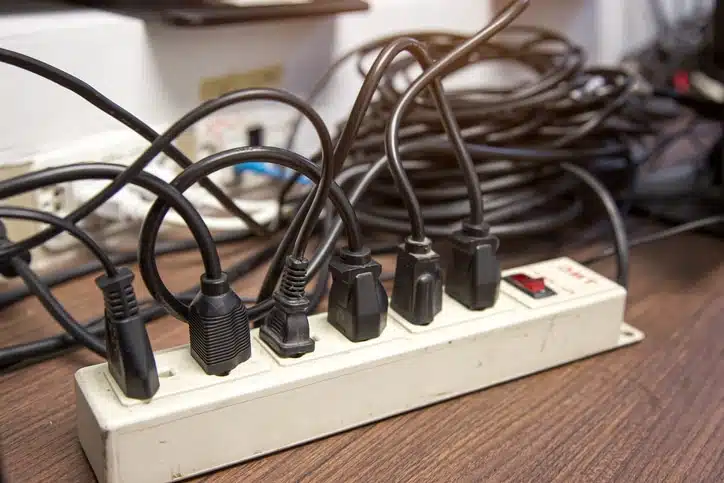
When outlets are limited, people often rely on power strips and extension cords. While convenient, these solutions can place sustained strain on circuits that were never designed for today’s electrical demand.
Wear and tear in high-use areas
High-use areas like kitchens and bathrooms see constant plugging and unplugging of appliances. Over time, these repeated actions can loosen connections and increase heat buildup at outlets and fixtures.
Unpermitted or improper work
Electrical modifications that are not performed to code can introduce hidden hazards behind walls, where problems may go undetected until they escalate.
Electrical Warning Signs You Shouldn’t Ignore
Electrical issues rarely appear out of nowhere. Common warning signs include the following:
- Flickering or dimming lights
- Frequently tripped circuit breakers
- Warm or discolored outlets
- Buzzing or crackling sounds from panels or fixtures
These symptoms often indicate underlying problems, such as overloaded circuits, loose connections or electrical arcing. Addressing them early can help prevent more serious damage.
Practical Steps to Reduce Electrical Risks
The following steps can help improve electrical safety:
- Inspect cords, plugs and outlets for visible signs of wear
- Replace damaged outlets and fixtures
- Install additional outlets to reduce reliance on extension cords
- Avoid overloading circuits, especially in high-use areas
- Use extension cords only temporarily and not for high-demand appliances (e.g., space heaters, air conditioners)
- Install GFCIs where required, particularly in kitchens, bathrooms and other areas where water is present
- Schedule periodic inspections with a licensed electrician
Even small improvements can make a meaningful difference in reducing risk.
How Electrical Safety Affects Insurance Coverage
Electrical issues don’t just create safety concerns; they can also affect how an insurer evaluates and covers losses. From an insurance perspective, many electrical risks are considered preventable, particularly when they involve aging systems or known warning signs that were not addressed.
Taking a proactive approach to maintenance and inspections can help reduce both the likelihood of a loss and complications if a claim occurs.
Get Ahead of Electrical Risk with the Right Insurance Guidance
Not sure how your building’s electrical systems stack up today? Since 1976, Stu Cohen and the City Building Owners Insurance team have helped New York City property owners identify hidden risks and reduce exposure before a loss occurs.
Call 877-576-5200 for a no-obligation, risk-focused insurance review.
