
How NYC Landlords Manage Risk to Maintain Insurable Buildings

Landlord insurance in New York City is tricky. This guide outlines critical risk management factors that influence insurance eligibility, pricing, and coverage for New York City landlords. Each section addresses a specific area that insurers evaluate when underwriting small residential and mixed-use buildings.
New York City landlords face several unique challenges. As one of the oldest cities in the country, New York has many historic properties supported by an aging infrastructure. Add in the population density of the five boroughs, and it’s no wonder the city has one of the nation’s most complex construction codes. Plus, New York City landlords must adhere to the strict standards set by the NYC Department of Housing Preservation and Development (HPD).
While the city presents special challenges for landlords, these issues are not insurmountable. They simply require specialized solutions, tailored for property owners in this unique urban environment.
How HPD and DOB Property Violations Affect Insurance Eligibility in NYC
As global warming increases the frequency of catastrophic losses, insurance companies seek to reduce exposure wherever possible. Many insurers have focused on property violations in their quest to limit risk. Sidewalk violations represent an alarming problem here in the five boroughs, spurring policy cancellations and notices of non-renewal.
In New York City, the primary agencies that issue property violations are the HPD and the Department of Buildings (DOB).
- HPD violations generally focus on housing quality and tenant health/safety issues, like heat, mold, pests, etc. These violations target noncompliance with the New York City Housing Maintenance Code and New York State Multiple Dwelling Law.
- DOB violations typically involve zoning and construction, as well as building safety. DOB inspectors issue violations when properties fail to comply with New York City Construction Codes, Zoning Resolutions, and other laws and rules (of which New York City has many).
The issuing agencies mail Notices of Violation (NOVs) to property owners. These notices include information on the specific violation, as well as corrective action and the remediation deadline.
Even so, many property owners don’t realize they have open violations until their insurance policy comes up for renewal. Sometimes the violation has already been corrected, but the issuing agency hasn’t certified the correction. Both situations typically require last-minute scrambling to clear up the violation before the policy expires. Otherwise, owners face higher premiums, potential coverage gaps or, in some cases, policy cancellation.
Since most of the violations issued to New York City landlords come from HPD, this guide focuses on correcting—and preventing—HPD violations. (Note: Landlords with illegal basement conversions can expect to hear from the DOB.)
Why HPD Property Registration Matters to New York City Landlords
HPD requires annual property registration by owners of residential buildings with at least three units or private dwellings (one- or two-family homes) not occupied by the owner or an immediate family member. While September 1 is the deadline for annual property registration, HPD also requires registration whenever the building ownership changes or other registered information changes, such as the managing agent or on-site management. (Note: Any time the name on the deed changes, notify your broker to ensure that the policy name matches.)
For registration purposes, HPD requires owners to provide their primary physical location as their residential address. HPD uses this contact information for official notification, including NOVs. The agency will not send mail to a post office box or similar service, either public or private.
New York property owners can check for violations at any time online on HPD Online and the Buildings Information System (BIS). In fact, reviewing the property profile every six months can help building owners avoid unpleasant surprises when renewing their insurance policies.
It’s still a good idea to maintain up-to-date property registration with HPD. Failure to register can result in civil penalties of $500 up to $5,000, depending on building size. Perhaps more importantly, properties without valid registration cannot certify or dismiss violations.
How NYC Landlords Correct and Dismiss HPD Property Violations
The violation correction and certification process can be complex and time-consuming, depending on the nature of the infraction and the municipal agency involved. HPD violations, for instance, have varying remediation deadlines, based on their severity:
- Class A (Non-Hazardous). Must be corrected within 90 days
- Class B (Hazardous). Must be corrected within 30 days
- Class C (Immediately Hazardous: Lead-Based Paint, Window Guards, Mold, Pests). Must be corrected within 21 days
- Class C (Immediately Hazardous: Self-Closing Doors). Must be corrected within 14 days
- Class C (Immediately Hazardous: Heat and Hot Water). Requires immediate correction
- All Other Class C (Immediately Hazardous). Must be corrected within 24 hours
Upon correcting the violating condition, property owners must certify the correction by the date specified in the NOV. Failure to correct and certify the correction of conditions by the NOV deadlines exposes owners to civil penalties, inspection fees, and enhanced enforcement, including the correction of immediately hazardous conditions. (The city bills owners for any repairs made through the Emergency Repair Program.) Most violations can be certified online through eCertification; however, Class C violations involving lead-based paint, mold and pests must be certified through a paper submission.
HPD may inspect properties to confirm the correction of violating conditions. If HPD does not inspect the property, the violation will be “Deemed Corrected” after 70 days. However, this wait period may be too long for building owners facing a deadline, such as an impending insurance policy renewal. In such cases, owners should call the Borough Service Center and request an inspection after correcting and certifying the violation. However, the HPD may not be able to accommodate these requests, which is why landlords should scan for violations every six months as part of their due diligence.
Of course, avoiding violations in the first place is even better.
Essential Property Maintenance to Reduce Risk for New York City Landlords
Many property violations arise from habitability issues (related to basic living standards, including functional plumbing, electricity, heat, etc.) and public safety concerns. While landlord requirements may seem onerous in a tenant-friendly city like New York, many of them come down to good housekeeping. Taking a proactive approach to maintenance and upkeep will make tenants happy and appeal to prospective residents, and it will also make these necessary tasks more manageable and less time-consuming by addressing issues as they occur.
For instance, a five-minute visual inspection is often enough to identify potential hazards before they become problems. At least once a month, owners should walk through the property and look for the following:
- Hallways and other common areas are clear and clutter-free.
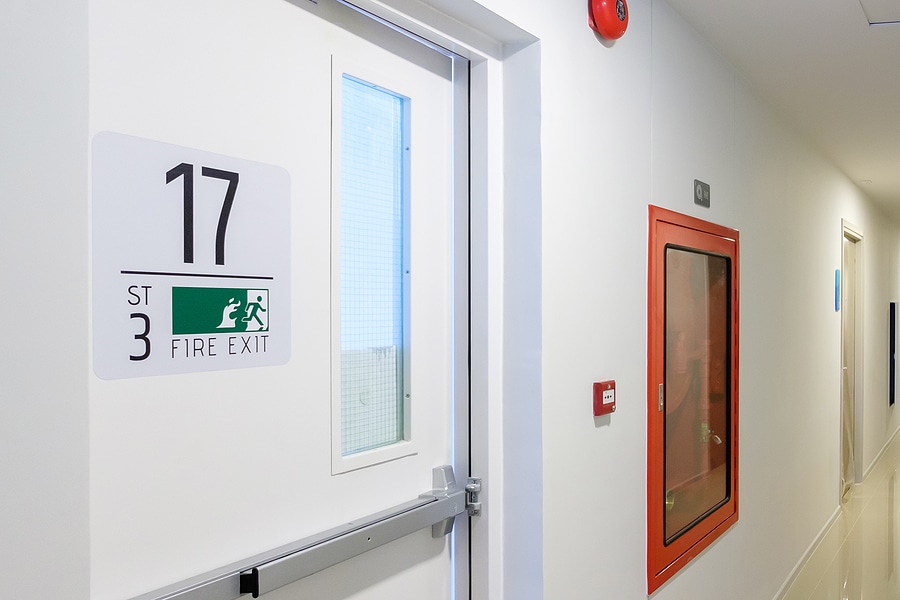
- Exit signs and lights are working.
- Handrails are tight and sturdy.
- Internal and external stairs are in good repair, with no loose, broken or worn treads.
- Portable fire extinguishers are operational, easily accessible and haven’t passed their expiration dates.
- Circuit breaker boxes and water shutoff valves are easily accessible. (Also, all building personnel should know where to find these controls.)
- Sidewalks are clear and in good condition.
Using a checklist to track annual and seasonal property maintenance tasks will help prevent important items from slipping through the cracks. In general, the following guidelines address most maintenance chores:
- Check building systems (e.g., plumbing, HVAC, sprinklers, water heaters) at least once a year.
- Clean gutters and downspouts twice a year to remove spring and fall debris.
- Look for signs of water damage inside the building and outside, including the roof and roof-to-wall connections.
- Clear snow and ice from sidewalks and steps, and keep a log to document snow/ice removal.
- Test smoke and carbon monoxide alarms twice a year. Replace batteries at this time until all of these devices have sealed batteries.
When inspecting building systems, pay particular attention to electrical systems. In older NYC buildings, these systems typically receive the closest underwriting scrutiny, particularly where aging infrastructure has not kept pace with modern demand.
Landlords in New York City also need to plan for city-mandated inspections, including:
- Gas line inspections, mandated at least once every four years by Local Law 152, based on community district. While one- and two-family homes are exempt, even buildings without gas piping need to hire a registered design professional to certify the absence of gas piping.
- Annual indoor allergen hazards, including pests and mold, required by Local Law 55
How Building Maintenance Affects Landlord Insurance
Staying on top of building maintenance is one of the best ways to avoid costly headaches later. While this statement applies to homeowners, it’s especially relevant for landlords, who have more at stake. Owners of smaller properties, in particular, often rely on their buildings for their primary residence and their income.
Insurance companies base policy premiums on a property’s building profile. Open violations represent obvious red flags, but insurance inspectors also look for other signs that an owner takes care of the property, such as clutter-free hallways and common areas, tidy landscaping, and other items mentioned in the previous section.
In addition to standard maintenance tasks, owners of brownstones and other historic properties should plan for major system upgrades (e.g., heating, electric, plumbing). Some insurers won’t issue policies for properties with systems that exceed a certain age. While system upgrades can be expensive, they often save money over time through increased efficiency and lower insurance premiums. After all, a new plumbing system is less likely to leak than one dating to the 1980s.
These types of upgrades usually require hiring specialized contractors, which introduces an additional area of exposure for New York City building owners.
How NYC Landlords Manage Risk When Hiring Contractors

New York’s distinctive skyscrapers have defined the city for more than a century. One legacy of these impressive edifices is the Scaffold Law, New York Labor Law Section 240 (1), which holds contractors, building owners and/or their managing agents responsible for any gravity-related injury to a worker—even with no scaffold in sight. Landlords need to manage the risk of hiring contractors by taking specific steps.
Risk management starts with due diligence in vendor selection. Property owners should review examples of the contractors’ work and request recommendations from previous clients. Where applicable, this step should include verification that the contractor holds a valid license.
Upon choosing a vendor, building owners should secure a written contract with an indemnity provision to ensure that the contractor—not the landlord or managing agent—bears responsibility for any losses arising from work performed on the property. Having a qualified attorney review such agreements before signing will ensure proper risk transfer.
In addition, property owners should require proof of insurance from contractors and other vendors. It’s essential to review the certificate of insurance (COI) to confirm that the contractor has workers’ compensation coverage and the following minimum liability limits:
- $1 million per occurrence for personal injury and advertising injury
- $2 million in aggregate coverage
Owners should also ask to be named as a “primary” and “non-contributory” additional insured on the contractor’s general liability policy. This critical step will cover losses arising from the contractor’s work at the building, up to the contractor’s coverage limits.
One final note: Landlords should not provide any tools, ladders, or other equipment to contractors, tenants or tenants’ contractors. This kind act could expose owners to liability if the loaned equipment is involved in an accident.
Why Ordinance or Law Coverage Is Essential for New York City Buildings
Even with regular maintenance and system upgrades, chances are high that some aspects of the building don’t conform fully to the prevailing construction codes. This is why New York City property owners need Ordinance or Law Coverage in their landlord insurance policy.
In the event of a covered loss, landlord insurance restores the property to its previous condition, subject to the policy’s deductible and limits. If construction codes have changed since the property was built or updated, then the owner must pay for any upgrades required to comply with current building codes.
Ordinance or Law Coverage bridges the gap between a building’s pre-claim condition and current code requirements, making it indispensable for property owners in New York City. Not only are most of the buildings older, but the city also updates its construction codes frequently to address the unique public safety challenges of a densely packed metropolis. Without this protection, a large claim can easily result in expensive, out-of-pocket property upgrades.
NYC Landlord Advocates: City Building Owners Insurance
Even at the best of times, New York City landlords operate in a challenging environment. Changing weather patterns, ever-evolving building regulations, and the widespread adoption of technology have made the property management landscape even more difficult to navigate. Stu Cohen and his team at the City Building Owners Insurance Program have helped small building owners manage risk and protect their investments since 1976. They track industry players and developments to keep clients informed of the best available options for their unique properties and situations. When issues arise, they advocate on behalf of property owners with the insurance providers, applying creativity and decades of experience to find solutions to client challenges.
Some insurers reward building owners who are diligent about proactive building maintenance and risk management. Landlords who maintain strong risk profiles and clean building histories are not only more insurable, but they may also qualify for specialized programs designed for lower-risk NYC properties.
In today’s risk-averse markets, many landlords are seeing double-digit premium increases, despite having no claims. The City Building Owners Insurance team offers complimentary, no-obligation policy reviews, a can’t-lose situation for building owners. We’ll do our best to save you money, improve your coverage, or both. And if you already have the best policy for your situation, we’ll confirm that.